Build · from £5,000 · fixed quote
Your growth setup and your AI tools, built properly and handed over.
A one-off project with one fixed price, agreed before we start. It can be the setup your growth runs on, an AI agent that takes a repeated job off your team, or a dashboard that shows how the business is doing.
What I build
Three kinds of build.
A growth setup
The tracking, the CRM, the email journeys, the dashboards and the A/B testing setup your growth runs on. Chosen, set up, connected and checked, then handed over.
An AI agent for one job
An assistant that takes one repeated job off your team. For example: answering “where is our pipeline?” in Slack, researching new leads and writing first drafts, or matching payment emails to invoices.
An operations dashboard
One private page that shows revenue, customers, churn and pipeline, pulled from the tools you already use and refreshed on a schedule.
Who it is for
You know something needs building.
- You have just raised money, or you are about to, and the growth plan in your deck needs a real setup behind it
- Three people in your team quote three different conversion rates, and nobody trusts the numbers
- Someone on the team spends hours every week copying data between tools, chasing updates or writing the same email again
- You open five tools every morning to see how the business is doing
- You want your own team to run it afterwards, with clear notes
Not sure yet what to build first? That is what the Audit is for: two weeks, £1,500, and the fee comes off the Build.
What you get
Everything on this list, nothing vague.
One-off project · Fixed quote · usually 3–10 weeks
from£5,000
Build
I build your growth setup and your AI tools
For when you know what you need built, or the Audit has told you.
A one-off project with a fixed price, agreed in writing before we start. When it is finished, your team runs it, or I do.
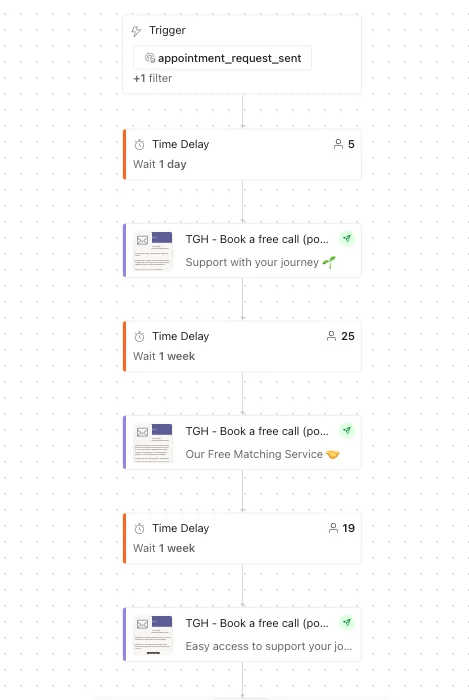
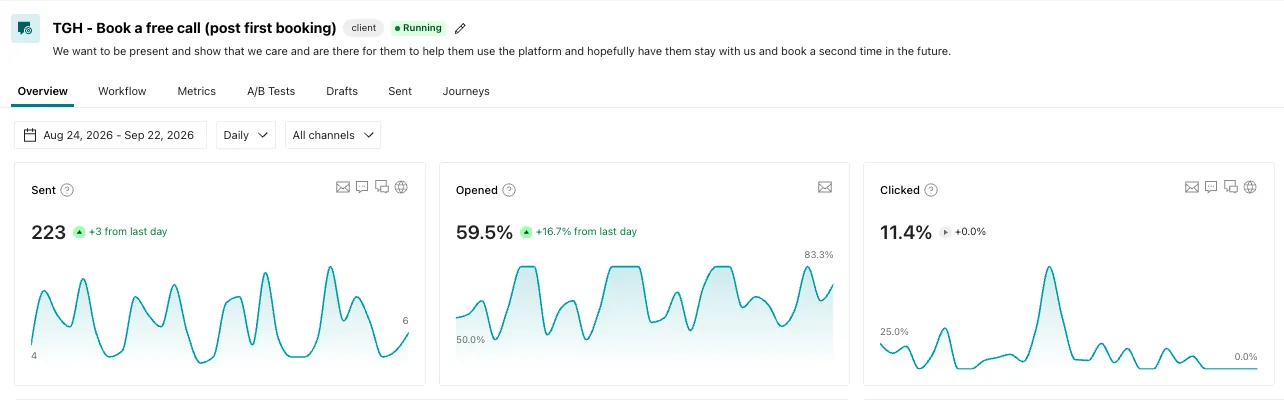
- A growth setup: tracking you can trust, a CRM, email journeys, dashboards and an A/B testing setup
- An AI agent for one repeated job, such as lead research, pipeline updates in Slack or matching payments to invoices
- An operations dashboard that shows revenue, customers, churn and pipeline on one private page
- Safe limits on every AI tool: read-only access first, a person approves anything that sends or pays, a spending cap, and an alert if a run fails
- Written notes, a handover session, a short video walkthrough, and 30 days of fixes after launch
Not included
- Hourly or day rates. You get one fixed price for an agreed scope.
- Running it month to month. That is Run.
- Software subscriptions and AI running costs, which you pay directly.
- Large or high-risk AI systems, such as an agent that moves money on its own. When a problem needs a machine-learning model, I bring in a specialist from my network.
What moves the price
- Tracking a mobile app as well as a website
- Fixing a broken existing setup instead of starting fresh
- Several tools to connect, or data from several sources on one dashboard
- An agent that needs more than two or three tools
- A lot of coordination with an outside development agency
I give you the full price after the first call, and it does not change once we have started.
How I keep AI tools safe
- We write down what the AI tool does, what it reads and what it must never do, before anything is built
- It starts with read-only access, and gets only the tools it needs
- Anything that sends an email, makes a payment or deletes something waits for a person to approve it
- Every AI account has a spending cap, and you get an estimate of the monthly running cost before we build
- It is tested on your real examples, and you get an alert if a run fails
- Health and payment data stay out of AI tools unless we agree otherwise in writing
Prices are in GBP and exclude VAT where it applies. I invoice in GBP, or in EUR or USD if you prefer. Software subscriptions, AI running costs and specialist fees are paid separately.
How it goes
How a Build goes.
The order matters. Each step only works if the one before it is done properly.
First week
We agree what done looks like, in writing
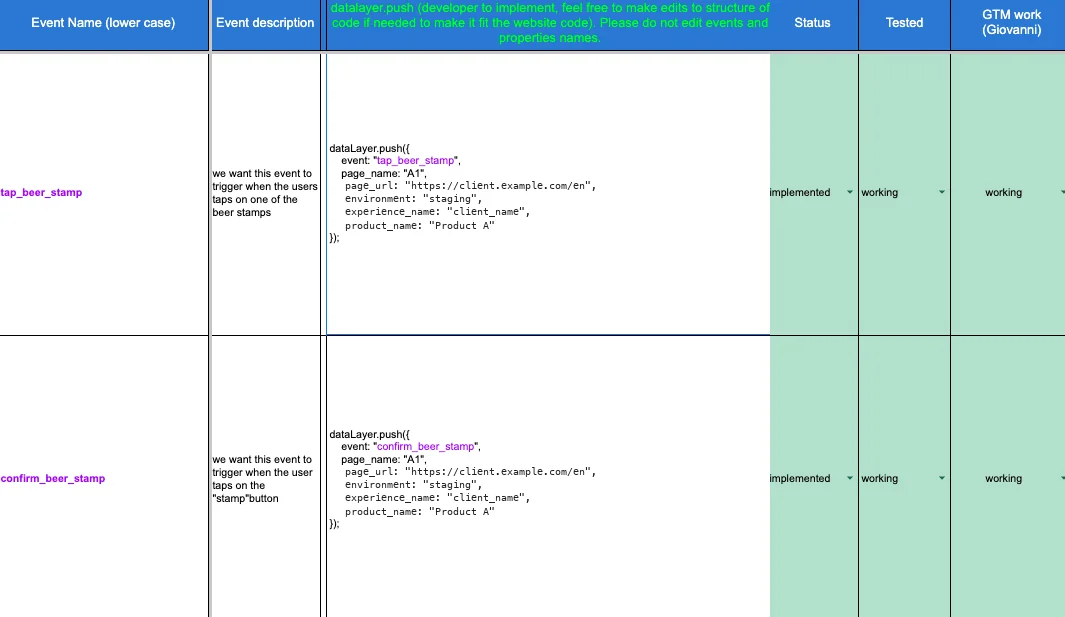
For a growth setup, that is the funnel, the KPIs and every event. For an AI tool, it is the job, the tools it may use, and the rules it follows. Nothing gets built before this is agreed.
The build
I build it and connect it
Tools chosen, set up and connected to each other. Tracking goes in with your developers, following a brief I write. Agents and dashboards are built and connected to your tools with the access we agreed.
Testing
We check it against real data
Every event checked against real traffic. Every agent run on your real examples, then fixed where it gets things wrong. Every number on a dashboard checked against its source.
Handover
Notes, a session, and 30 days of fixes
Notes for every part of it, so your team knows how it works and why it was built that way, a session to walk through it, and a short video you can share with new people. If something breaks in the first 30 days, I fix it.
When a channel needs a specialist, I bring in someone from my network. These are people I have worked with for years. I brief them, check their work and stay responsible for the result. Meet the network →
The actual work
What you end up holding.
A few examples of what I hand over, taken from real projects. Client names and URLs have been replaced.
What it looks like
Two examples of this work.
Givergy
Mixpanel set up from scratch, then weekly experiments with their in-house team.
Read the case study →Something I built · AI product · 2026A live, paid product, not a demoRoastMyFlow
An AI agent that goes through your website like a real customer, and tells you where it got stuck.
Read the case study →Questions
Questions about a Build.
What does “from £5,000” cover?
What can you not build?
Who pays the running costs of an AI tool?
Do you need our developers?
Which tools will you pick?
What happens afterwards?
Can we skip the Build and go straight to Run?
From the blog
How I build these, step by step.
Startup analytics setup: what I do first, and in what order
Most growth work fails in the first two weeks, before anyone has run a campaign. Here is the order I set things up in, and why each step needs the one before.
Read it →How to write a tracking plan (with a free template)
The tracking plan I write with every client on day one: what goes in each column, the order I fill it in, the GA4 rules I check, and a free template to copy.
Read it →GA4 or PostHog: which one should an early-stage startup use?
GA4 vs PostHog, from someone who runs both. When I pick GA4, when I pick PostHog, when I run the two together, and how PostHog compares with Mixpanel.
Read it →The bug that made my AI agent say "done" when it wasn't
What building an AI agent taught me about the word done: how I found a false-completion bug in RoastMyFlow, how I proved it and how I fixed it for good.
Read it →How to run experiments that build on each other
Most testing programmes end up as a folder of unclear results. The difference is not cleverer tests. It is what happens before and after each one.
Read it →I built an AI agent that walks any flow on your website
How I built RoastMyFlow, an AI agent that walks any flow on your website as your customer, and how it keeps getting better with every roast it runs.
Read it →
A thirty-minute call, no slides.
If I am not the right fit, I will say so on the call and tell you who is.