Founders often ask me whether they should hire a Head of Growth or a Head of Marketing first. It is a fair question, because the two job descriptions look alike and both promise more customers. I have worked on growth with more than fifty companies, often next to a marketing team, so this is how I help founders choose.
What is the difference between a Head of Growth and a Head of Marketing?
A Head of Marketing usually owns what the company says and where it says it. That means the brand, the positioning, the campaigns and the marketing channels.
A Head of Growth owns the numbers across the whole customer journey. That journey starts with the first visit, goes through sign-up and the first purchase, and ends with a customer who stays. The job is mostly about measurement, A/B testing, email journeys and changes to the product made with your developers.
In a small company the two jobs overlap a lot, and plenty of people use the titles loosely. So I do not start with the titles. I start with two questions about your company: what stage are you at, and who is already on the team?
Which one do you need first?
The first question is about your stage. Andrew Chen, who led growth at Uber, describes this well in his essay on hiring a Head of Growth. He says that before growth is repeatable, the founders should lead it themselves. Later, the company needs a hands-on person who can build a channel, and only at real scale does it need an executive who manages a large team.
I see the same pattern with my clients, and I would put it like this:
- You do not have a product people use regularly yet. Neither hire is urgent. The founder is the best growth person, and the money is better spent on the product.
- You have traction, but people arrive and do not convert, or convert and do not stay. A Head of Growth usually comes first, because the problem lives in the funnel and the numbers.
- The funnel works, but too few people know you exist or understand what you do. A Head of Marketing usually comes first, because the problem lives in the brand and the message.
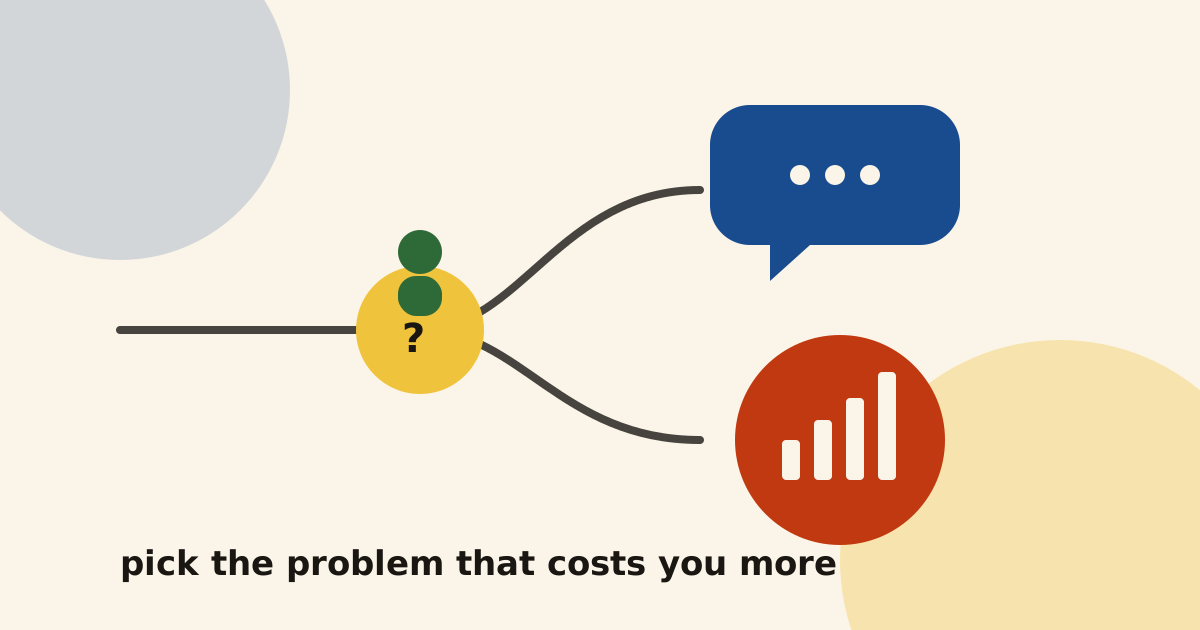
- Both are true. Start with whichever problem is costing you more money right now, and measure it before you decide.
That last point matters more than it sounds. It is easy to feel sure the problem is awareness, when the data would show that most visitors leave on the pricing page. You cannot tell which problem is bigger until you can trust your numbers.
Who is already on your team?
The second question is the one I ask on every first call. Is anyone doing marketing in house, even one person? The answer changes what the role should look like, whichever title you give it.
If you already have marketers, you need someone to lead them
Some companies already have a marketing manager, a paid ads person or a content writer. What they are missing is a senior person who decides what to test, reads the numbers and connects the work to revenue.
At Givergy, the team already had a marketing manager, a PPC manager and an SEO manager. What they needed was someone to set up the measurement and run weekly experiments with them, and that was my job. The playbook we built kept running after I left.
This is how my Growth Lead package works. I lead growth with your team, brief your people and do the parts that are mine, like analytics, automation and the test setup.
If you have nobody, you need someone who does the work
Many founder-led companies have nobody in marketing at all, or one junior person. Here a senior leader with nobody to lead is an expensive problem. Whoever you bring in has to build things with their own hands.
At Augmentive, I started by running Google Ads and landing pages myself. Over time I took on the tracking, the email automation, the testing and finally the sales pipeline in HubSpot. When the ads account needed a specialist, I brought one in from my network and managed them.
This is how my Growth Team package works. If you have a team, I lead it. If you do not, I become it.
What about a Head of Growth vs a CMO?
People search for this comparison a lot too. A CMO is usually the most senior marketing person in the company, with a team and a budget, and the role leans towards brand and positioning. In many startups, “Head of Marketing” and “CMO” describe much the same job at different sizes.
So most of what I wrote above applies here as well. I explain where a fractional CMO and a fractional Head of Growth differ in my post on what a fractional Head of Growth does. If you are comparing costs, this post on UK fractional CMO prices sets out day rates, retainers and what a full-time salary really costs.
Back in 2012, Andrew Chen argued that the growth role was replacing the traditional VP of Marketing in startups. I would not go that far. Both jobs still exist, and a good company needs both in the end. The real decision is the order.
Should your first marketing hire be a Head of Growth?
Your first marketing hire is a big decision, because that person shapes how the company thinks about customers. In my experience, founders usually choose between three options:
- A junior marketer on their own. This is cheaper, but they often end up busy with tasks without knowing which ones matter. Nobody checks whether the work moved a number.
- A senior full-time leader. This makes sense once there is enough senior work for five days a week. Before that, you pay a senior salary for a role that is partly empty.
- A fractional lead, with or without a junior marketer. You get senior direction for a share of the week. When the work grows, you hire full time, and the new person inherits a working setup and a written record of what worked.
Whichever you choose, get the measurement right first. A new hire who cannot trust the numbers spends their first months arguing about them. If your setup needs building from scratch, that is a fixed project I run as Growth Foundations.
When a Head of Growth is the right first hire, and when it is not
In my experience, a Head of Growth should come first when:
- You have paying customers and at least one channel that works
- People drop off somewhere in the funnel, and nobody can say exactly where
- Your tracking, email journeys and tests have no clear owner
- Your investors ask for numbers that take you a day to pull together
A Head of Marketing should probably come first when:
- Your funnel converts well, but too few people reach it. Then reach and message are the bottleneck.
- Nobody can explain clearly what your brand stands for. A growth lead can test messages, but someone has to write a good one first.
- You sell mostly through events, partners or PR. Those channels depend on relationships and brand more than on A/B testing.
I am a growth person, so I am naturally biased towards growth. That is exactly why I tell founders when they need a marketer instead of me.
How I would help you decide
On a first call, I ask about your stage, your numbers and who is on the team. That is usually enough to tell whether you need a Head of Growth, a Head of Marketing, a full-time hire or nobody just yet.
If a fractional Head of Growth fits, have a look at how I work as a fractional Head of Growth, where both packages and their prices are listed. Or book a thirty-minute call below, and I will tell you honestly which hire I would make first in your place.
hire for the problem that costs you most, and look at who is already on the team
Questions people ask
What is the main difference between a Head of Growth and a Head of Marketing?
Is a Head of Growth the same as a CMO?
Should my first marketing hire be senior or junior?
Can I start with a fractional Head of Growth and hire full time later?
Written November 2026. Platform facts checked at the time of writing; if you are reading this much later, check them again.